June Mendoza AO, OBE, RP, Hon. SWA, FROI (1924 – 2024)
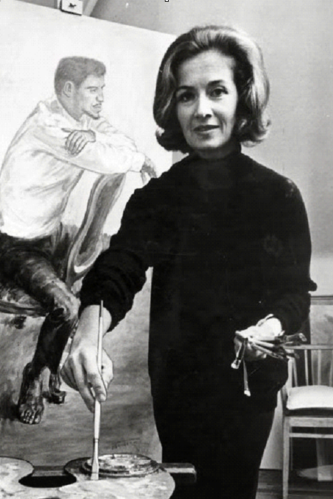 Born in Melbourne, Australia, June Mendoza was the first child of professional musicians working in the theatre – her father was a violinist and her mother a pianist. As a child, June toured with her mother and went on stage, working, as she described it, in ‘small mime parts and crowd scenes for the opera, ballet, musicals and revue’. From an early age June loved to sketch, particularly portraits. Her schoolmates were among her earliest sitters, and as she approached her teenage years June discovered that she had an innate ability to depict the human form, and particularly to get a likeness.
June started life classes at 14, and by the age of 17 was illustrating book jackets, magazine illustrations and record sleeves. She also undertook a major illustration commission for a Town Planning exhibition. It was around this time that June got her first job as an illustrator of comic strips, owing to her ability to maintain the likenesses of the various characters in the stories.
In the early 1950’s June moved from Australia to England – “the world was on the other side, and we all wanted to be there” – and worked for Hulton Press, producing illustrations and comics for Eagle’s companion title Girl, under the pseudonym Chris Garvey. It was around this time that June also began professionally as an actress, appearing in the West End theatre as well as on the radio, films and TV, but inevitably painting, and in particular portraiture, took over and became June’s full-time occupation into which she threw herself with relentless energy and dedication.
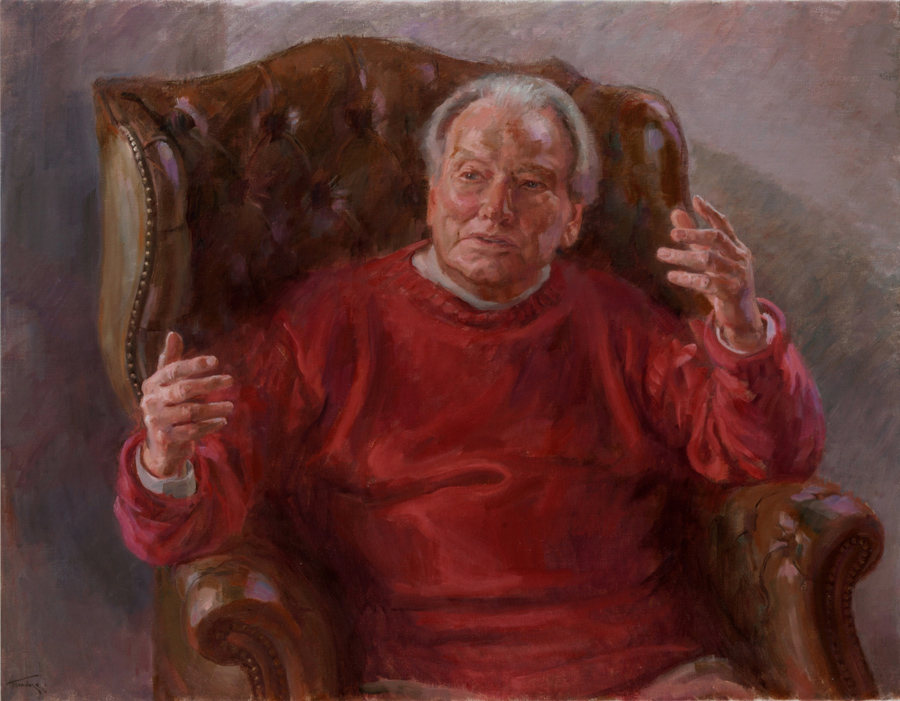
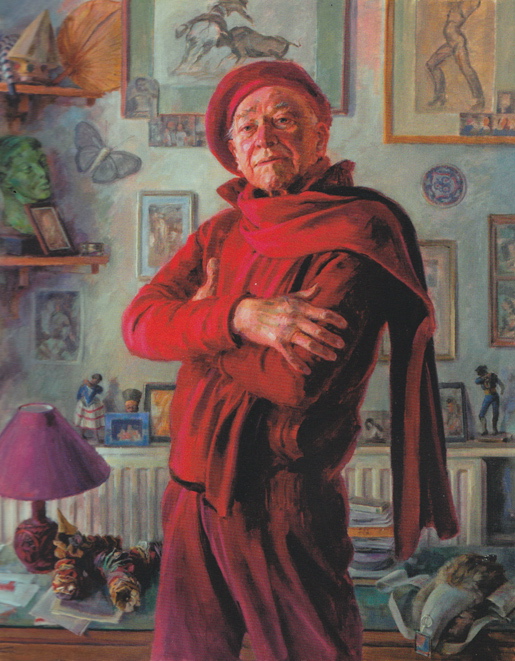
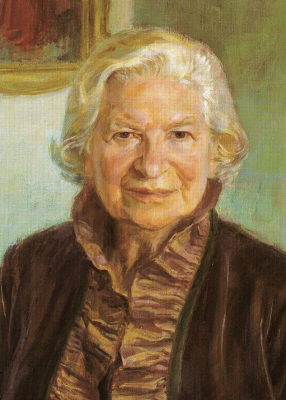
Over eight decades June established herself as one of the foremost portrait painters working in Britain. She painted distinguished people from all walks of public life, including royalty, heads of state, religious leaders, leading figures in the arts and entertainment, as well as sports personalities and prominent figures in the fields of academia, medicine, business and industry.
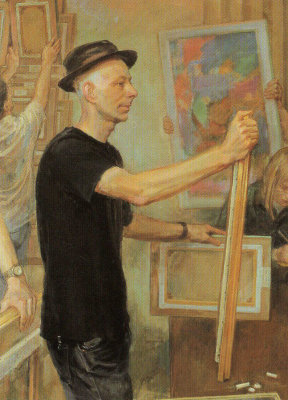
Although perhaps best known for her high-profile commissions, June liked nothing more than to do what she called ‘pick-ups’ – uncommissioned portraits of people from everyday life, whom she would approach and persuade to sit for her. In 2000, June was a driving force behind the creation of the People’s Portraits exhibition, now housed in Girton College, Cambridge, which comprised portraits of ordinary people in their workplaces. A scaffolder, a picture hanger, a baker; ‘real people as they are, like me, getting on with work’.
Throughout her portraiture career June regarded her facility to get a likeness as just a starting point, saying that it ‘no more makes an artist than perfect pitch makes a musician’. She was a great believer in trying to say something about each person who sat for her, and often did this by studying and portraying their body language, which she said “makes each person different”. June also felt it was important to explain her intentions to the sitter, and to involve them in the process – “I like them to see as the picture grows. I like them to know what they are sitting there all that time for”, she said. “They then end up with an appreciation of how it happens and they are with you on it”.
June was made an officer of the Order of Australia (AO), and in 2004 was awarded the OBE for services to the Arts. She was a member of the Royal Society of Portrait Painters and an Honorary Member of the Society of Women Artists. She was elected a Member of the ROI in 1966 and served on the Council for many years. In 2024 June was made a Fellow of the Institute (FROI) for her outstanding service to the society.