Neville Fleetwood ROI
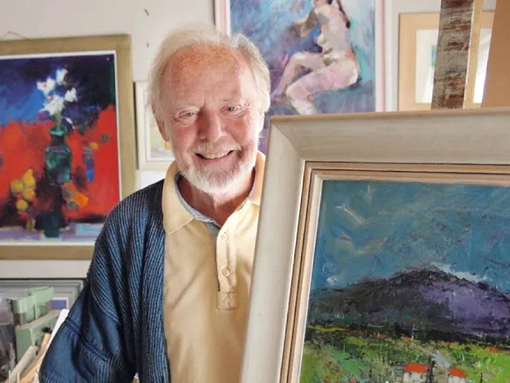 Neville Fleetwood started painting aged 12 after an enjoyable but otherwise unremarkable holiday to Blackpool. He says: ‘We were staying in a B&B and a girl who was also staying there was painting and it just fascinated me. I decided it was something I’d like to try.’ His parents encouraged Neville to enrol at Huddersfield Art School at the tender age of 16 where he was encouraged to fulfil his creative potential.
Neville Fleetwood loved his time at art school, which he attended with future fellow ROI Member William Selby, and said he tried everything from sculpture, life drawing, painting and design. He even went to the night school five times a week. After graduating from art school Fleetwood then worked in a graphic art studio before being called up for National Service. He later returned to graphic design successfully running his own business for thirty years. However, over the years, it was his love of painting which remained undiminished and eventually he retired from business interests in 1983 to concentrate on painting full time.
After Neville decided to focus on painting full time numerous prestigious art awards and successful exhibitions followed, and he became recognised as one of Yorkshire’s best loved artists. Neville was a natural colourist who found inspiration for his paintings from a number of sources, including other British abstract landscape artists such as Barbara Rae and William Selby. Their influence in Neville’s paintings- the use of colour and abstraction – are clear, as is the draughtsmanship of Ken Howard.
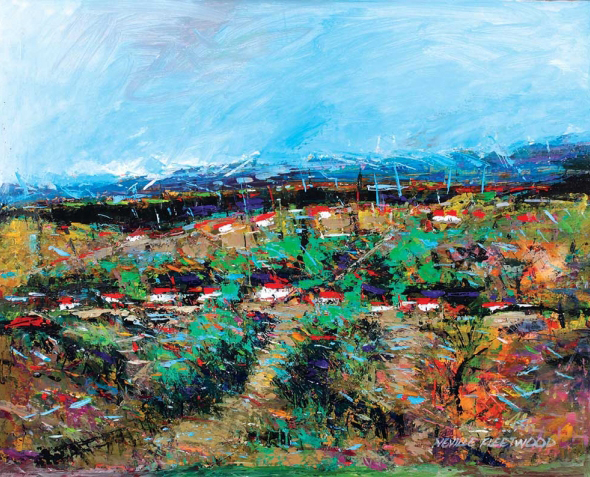
Neville Fleetwood landscapes and coastal scenes were predominantly of the Yorkshire countryside with hills and cottages flattened and not in perspective but he is also drawn to the South of France and Cuba. His still life art works were exaggerated not only in colour but in the shapes and sizes of the objects being painted. For Neville the pleasure of painting was in applying paint in bright colours thickly with brush and palette knife. The results were contemporary paintings with a strong, bold use of colour and vibrancy, developed by applying layer upon layer. His landscapes are full of atmosphere, with patchwork fields arranged into vivid abstract designs whilst his still life paintings contain everyday objects carefully positioned and crafted in suspended space. Most important for Neville was the juxtaposing and playing with how colours work together in compositions that made work visually exciting and vibrant.
Neville Fleetwood preferred to work with acrylics rather than oils, feeling that this gave his paintings a fresh vibrant feel as well as allowing him to work quickly, to revise and repaint as the composition developed. Using broad brush strokes allowed Neville to give an initial wash of colour to provide the background upon which thicker paint was often applied using a palette knife. This gave the painterly quality and texture that is so evident and appealing in his art works. Keeping a loose style of working means re-working of paintings possible and paintings were rarely completed in one session but rather re-visited and re-worked over time. Neville said: “It is very difficult to stop, but generally I know that when I start to add small touches of bright colour, the painting is nearly finished. I just seem to know when they look right”.
Neville Fleetwood exhibited widely at art galleries within the UK and was the recipient of a number of art awards. He was made a Full Member of the ROI in 2000.